Socket Safety: Why Plug-In Socket Covers Can Create More Risk, Not Less
Many parents, teachers and care providers use plug-in socket covers believing they make electrical sockets safer for children. It’s an understandable assumption — after all, covering something up feels like it should reduce risk.
However, with UK electrical sockets, the opposite is often true. Inserting plug-in socket covers can actually disable built-in safety features, increase the risk of electric shock, and in some cases create a fire hazard.
Written by DRA PAT Testing – electrical safety specialists for schools and businesses across the North East.
Why UK Sockets Are Already Designed to Be Safe
UK electrical sockets are widely regarded as some of the safest in the world. This is not by accident.
Since 1947, British Standards have required socket outlets to include an internal shutter mechanism. This shutter prevents access to live and neutral contacts unless the earth pin of a proper plug is inserted into the top hole. Until that happens, the live parts remain inaccessible — even to small fingers or objects.
In simple terms, a correctly installed UK socket cannot be made live by poking into the holes. Only a correctly shaped plug can open the shutters and energise the socket.
How Plug-In Socket Covers Defeat These Safety Features
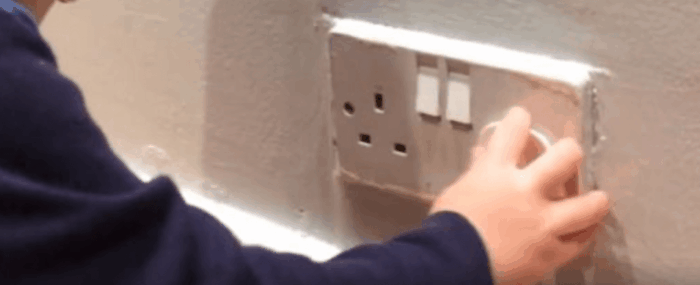
Plug-in socket covers are designed to imitate a plug. By inserting them into the socket, they open the internal shutters, exposing live parts behind the faceplate.
This creates several problems.
Firstly, many of these covers are not manufactured to British Standards (BS1363). Their pins are often the wrong size or shape, which can damage the socket’s internal contacts. Over time, this damage can lead to overheating and, in some cases, fire risk.
Secondly, some covers are extremely difficult to remove. People often resort to using knives, screwdrivers or other metal objects to prise them out — placing themselves at risk of contact with live components once the shutter has been opened.
In other cases, parts of the cover, particularly the earth pin, can snap off and become lodged inside the socket. When this happens, the shutters may remain permanently open, leaving the socket unsafe even after the cover has been removed.
Why These Covers Are Particularly Risky in Schools and Nurseries
In environments such as schools and nurseries, plug-in socket covers are often fitted with good intentions. Unfortunately, they can introduce risks that staff are unaware of.
Children are naturally curious. Some covers can be inserted upside down or manipulated in ways that expose live contacts. Others can be pushed through with small objects such as paper clips or pins.
There is also a false sense of security. Because the socket appears “covered”, damaged sockets or stuck pins may go unnoticed for long periods.
Evidence and Industry Guidance
There is significant evidence highlighting the risks associated with plug-in socket covers. Independent safety organisations and electrical professionals have repeatedly advised against their use.
The key issue is that these products interfere with the socket’s original safety design rather than enhancing it. Instead of reducing risk, they often increase it.
A Safer Alternative: Fitted Socket Covers
If there is a genuine need to restrict access to a socket — for example, to prevent accidental disconnection of equipment or to limit access in certain environments — a properly fitted socket cover may be appropriate.
These covers fit over the entire socket faceplate and do not interfere with the internal shutter mechanism. They can be supplied with simple latches or locks, depending on the application, and are far more suitable for commercial and educational settings than plug-in devices.
It’s important to note that fitted socket covers are not necessary everywhere, but where additional protection is required, they are a safer option than plug-in covers.
What We Do During PAT Testing
As part of our PAT testing and electrical safety work, we look beyond appliances alone. If we come across plug-in socket covers during an inspection, we will advise on the risks associated with their continued use.
Where appropriate, we may recommend removing them safely and discussing alternative solutions that do not compromise socket safety.
Electrical safety isn’t just about passing tests — it’s about understanding how systems are designed to protect users and avoiding practices that undermine that protection.
Final Advice
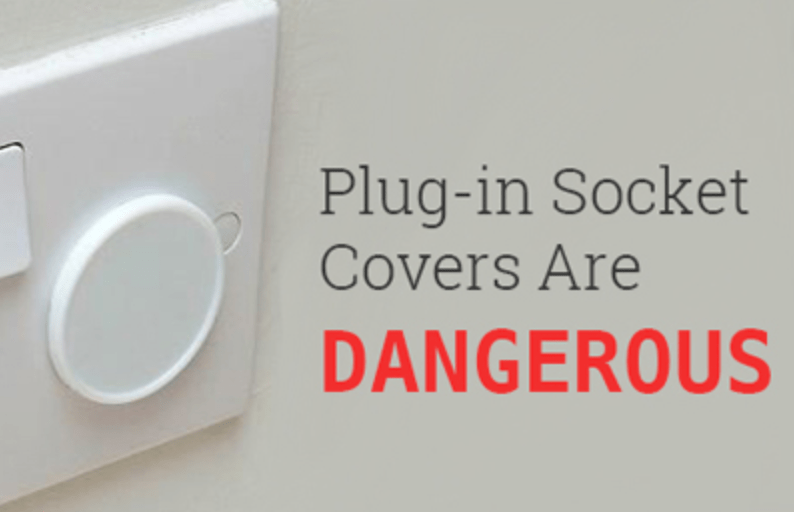
Plug-in socket covers are widely used with good intentions, but they are not recommended and can be dangerous. UK sockets already include built-in safety mechanisms that work effectively when left unobstructed.
If you are concerned about socket safety in your premises, seek professional advice rather than relying on plug-in devices that may increase risk.
Need Professional Advice on Electrical Safety?
If you’re responsible for electrical safety in a school, office or commercial premises, professional guidance can help reduce risk and avoid well-intentioned but unsafe practices.
We regularly advise businesses and education settings on electrical safety, PAT testing and practical risk reduction.
-
Learn more about our PAT testing for schools
-
See how we support office electrical safety