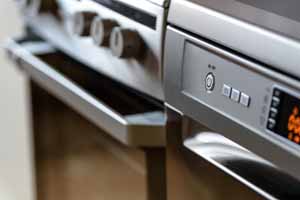
What are Fixed Appliances?
Fixed appliances refer to any electrical appliance that is hard wired to the mains; that means it does not have a plug, but requires an electrician or equally competent person to unwire it from the mains.
Fixed appliances cover alsorts of appliance from escalators and lifts, to hand-driers and showers, ovens and boilers, etc. Most fixed appliances require servicing rather than electrical testing, and the testing they do need should be done by the service engineer or electrician.
Some fixed appliances fall into the remit of the PAT tester, these are applianes that have had the plug removed and been hardwired, and or appliances that are integrated (e.g. kitchen appliances) where the plug is hidden behind and thus not accessible.
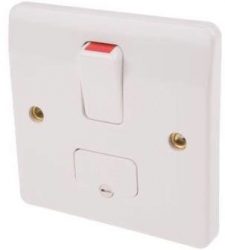
Fixed Appliances usually have their wiring go into a Spur Unit that looks like this. A spur usually has a fuse and a switch.
Fixed Appliances that the PAT tester tests
A PAT tester is usually not a trained electrician, although some do have the skills to work out mains wiring, most do not.
When an appliance is hard wired, you will be provided with a Minor Works Certificate, and this confirms the device has been correctly wired it, and acts as a safety certificate. Once it is wired in, a faceplate is secured to stop it being accessed or tampered with. Assuming that cover has never been removed its impossible for the wiring set up to change. If you are unsure, or have safety concerns then get the installer or another electrician to assess it.
Assuming the item used to have a plug, and is now hard wired the PAT tester can do a partial inspection of it. We can’t open the ‘Spur unit’ as that is the electricians domain, but we can visually inspect it including the visible cable, and the device itself. We can also run an earth continuity test between the screw on the spur and the device itself. We can’t do an insulation resistance test, because to do this, requires the spur to be opened and the wiring accessed.
We can also test integrated appliances in this same way, for example kitchen appliances like washing machines, fridges and cookers are often recessed into the units, and to remove them may lead to damage. So we conduct the same tests to check for safety.
This is sufficient as a test to ensure the appliance is safe.
Do you require Fixed Appliances Testing?
When we come across integrated or fixed appliances that ordinarily have a plug, we automatically do a PAT Test. It’s standard procedure.
If you have specific fixed appliances that require a PAT test, contact us to arrange an appointment.
Which fixed appliances does a PAT tester test?
Common ‘Fixed’ Appliances a competent PAT Tester would test, assuming they are fixed via Plug and socket:
- Water heaters (e.g. under-sink units)
- Hand dryers (plug-in models)
- Electric ovens (if plugged in)
- Fridges and freezers (if plugged in)
- Integrated Microwaves
- Dishwashers
- Washing machines
- Tumble dryers

More information on the Minor Works Certificate
When the appliance was hard wired by an electrician, a ‘Minor Works Certificate’ (MWC) was required, to confirm the appliance had been wired in correctly. The certificate is needed when the appliance is installed or even replaced, even if it’s just connecting it to an existing circuit. This applies even if the work doesn’t involve creating a new circuit. The certificate verifies that the work is safe and complies with relevant electrical regulations.
Whilst not always notifiable under Part P of the building regulations (especially for certain kitchen and outdoor work), the Minor Works Certificate is still a requirement of the wiring regulations (BS 7671).
So you should have one from the installation. If the PAT tester unwired the appliance and reattached it, we’d need to get a new certificate.
These other pages may interest you
Landlords PAT Testing
Latest Recalled Appliances