How to wire a plug – How do you wire a plug?
Firstly, how not to wire a plug!
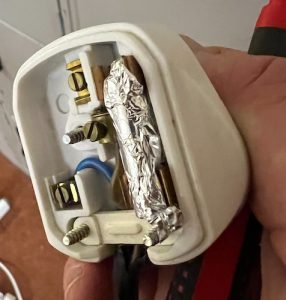
This is a clear example of how not to wire a plug — and unfortunately, it’s something we still come across far more often than you might expect.
In this case, a blown fuse has been replaced with tin foil. A fuse is designed to fail safely when something goes wrong. It “blows” to protect the appliance, the cable and the user from overheating, fire or electric shock. When that fuse is replaced with tin foil, that protection is completely removed.
Tin foil will not break the circuit if a fault occurs. Instead, it allows excessive current to continue flowing, which can cause the appliance to overheat, damage internal components, start a fire, or expose the user to electric shock — potentially repeatedly.
If something other than a correctly rated fuse is fitted inside a plug, the safety design of the plug has been defeated. At that point, the appliance is no longer protected in the way it was intended to be, and the risk to people and property increases significantly.
The important part – How to wire a plug correctly
If you’ve ever needed to wire a plug and wanted to be confident you’re doing it correctly, this guide is for you. It takes you through the process step by step, written by someone who checks plugs for a living and sees firsthand what can go wrong when they’re wired incorrectly.
Whether you’re replacing a damaged plug or fitting a new one for the first time, it’s important to take your time and follow the correct steps. If at any point you feel unsure or uncomfortable, stop and seek professional help. Electrical work should never be rushed or guessed.
If you’re based in the North East of England, we can advise or assist directly, just get in touch. If you’re elsewhere, the Portable Appliance Testing Trade Association provides a “Find a PAT Tester” service to help you locate a competent professional in your area.
In the UK, we use a 230-volt electricity supply. While everyday electrical equipment is designed with safety in mind, it can still cause serious injury or worse if it’s used or maintained incorrectly. Plugs, cables and appliances are all designed to reduce risk — but only when they are assembled and used as intended.
It often surprises people to learn how many incorrectly wired plugs we come across during routine testing. As PAT testers, we inspect thousands of plugs every year, and wiring faults are far more common than most people realise.
Not everyone needs to understand electrical installations in detail — that’s why electricians exist — but having a basic understanding of how to wire a plug safely is a useful skill. This guide is intended to help you do that correctly and safely.
How to Wire a Plug – Step by Step guide
Knowing how to wire a plug is a useful practical skill. With the number of electrical appliances used in homes and workplaces, it’s not unusual to need to replace a damaged plug or reattach one after a cable has been cut.
For example, if the cable on a hair dryer is damaged near the plug, the cable can often be cut back safely and a new plug fitted. Done correctly, this is a perfectly acceptable repair and avoids the need to replace the appliance unnecessarily.
Rewiring a plug can feel fiddly, but it is straightforward if you follow the correct steps and take your time.
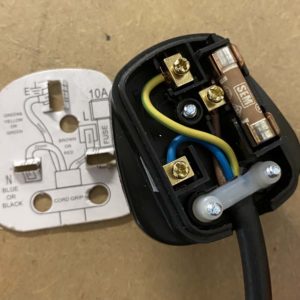
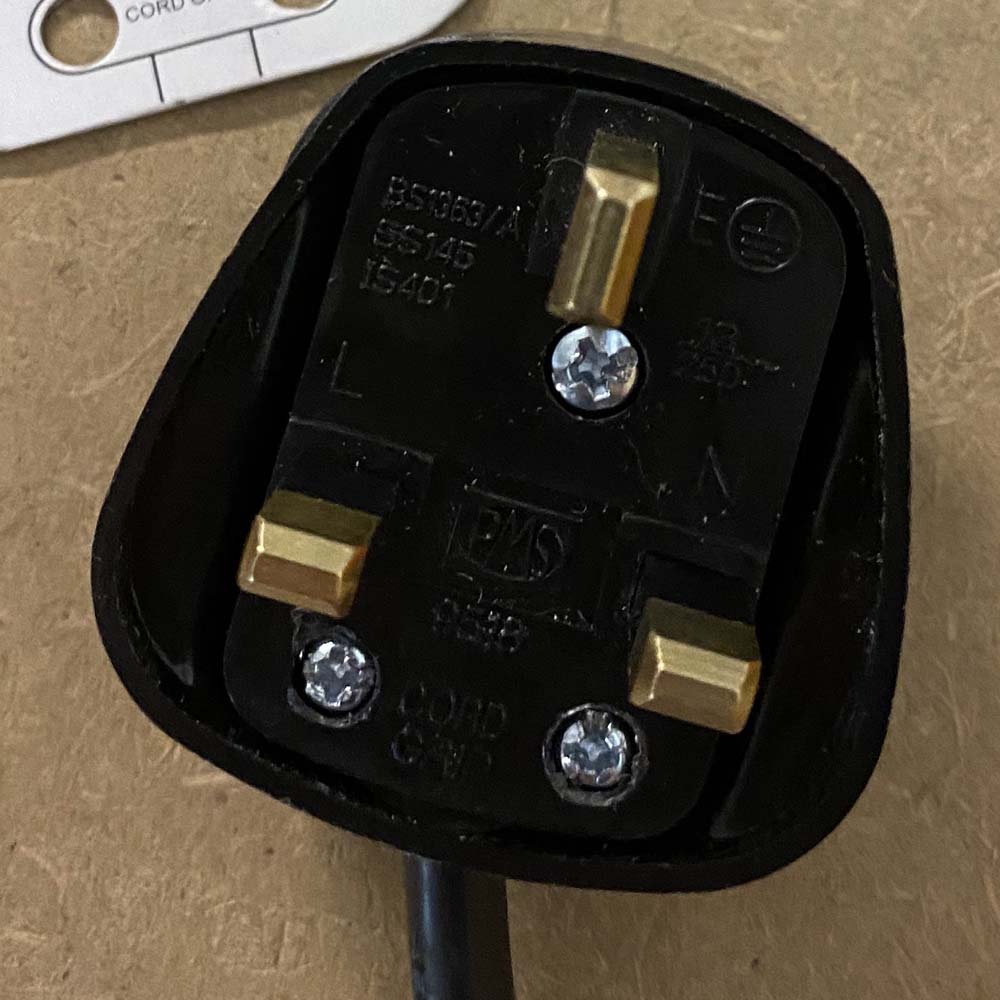
Most new plugs include a small cardboard wiring diagram attached inside the casing. This diagram is extremely useful, as it shows the correct wire lengths and terminal positions for that specific plug. You can see an example of this in the images below.
Make sure the card is removed before the plug is used, but don’t throw it away prematurely — it exists to help you wire the plug correctly. These wiring cards are surprisingly useful, and we remove and recycle them regularly during PAT testing, particularly from extension leads.
In some environments, such as charity shops, wiring cards are required to remain on plugs until appliances are sold. If you need replacement wiring cards for this purpose, they can be purchased separately.
Rewiring a plug – how to do it properly
Wiring a plug often causes more confusion than it should. While the task isn’t complicated, it does require care and attention to detail, and small mistakes can compromise safety.
During testing, we regularly see plugs that have been wired incorrectly, often by people who believed it was a simple job. In most cases, the issue isn’t lack of effort, but misunderstanding of the correct process or wire placement.
That said, there’s no need to be put off. If you follow the steps carefully and take your time, rewiring a plug can be done safely and correctly.
Most new plugs include a cardboard wiring diagram fitted over the pins. This diagram is an excellent guide, showing both the correct terminal positions and the recommended wire lengths. Before using the plug, the card must be removed — but while you’re wiring it, it provides clear, practical guidance and helps reduce mistakes.
How to wire a plug step by step guide
Step 1: Prepare the cable and identify the wires
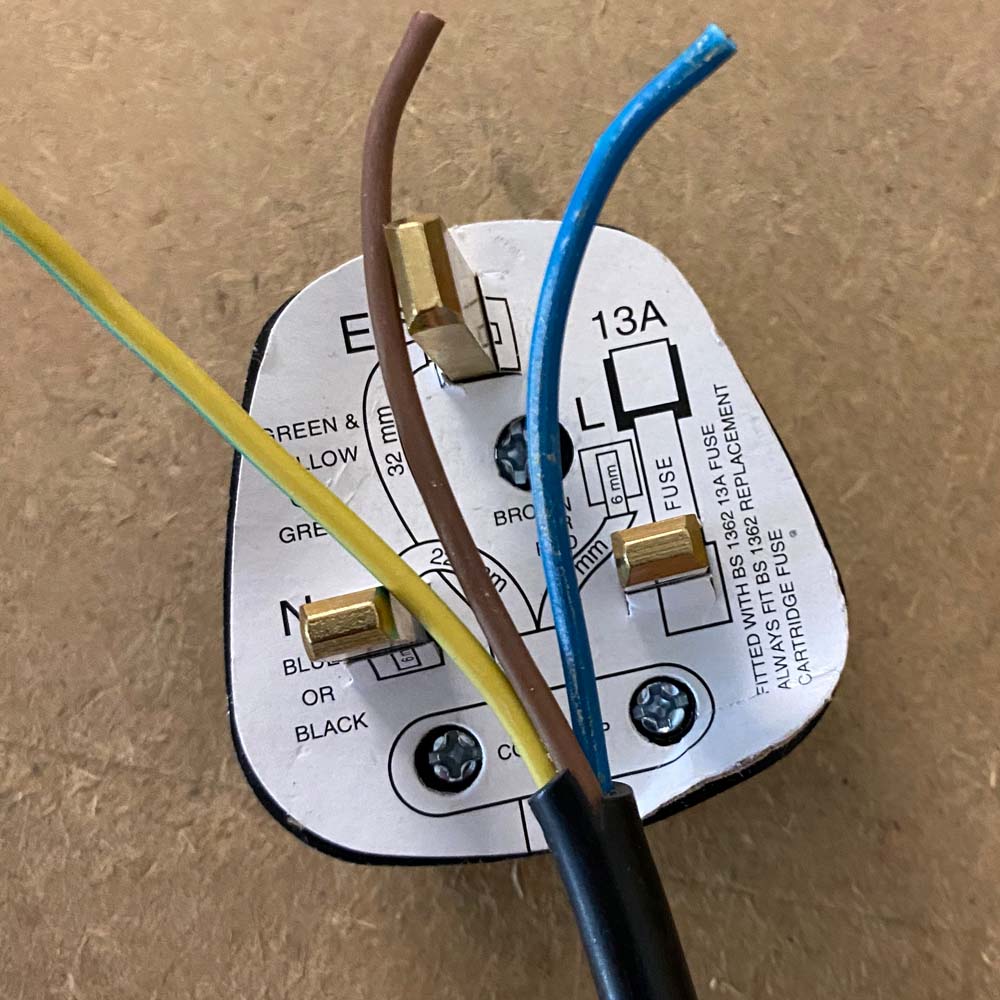
The first step when rewiring a plug is to carefully cut back the outer sheath of the flexible cable. This is the black (or sometimes grey) outer insulation that protects the individual wires inside. Cut back enough of the sheath to give yourself plenty of cable to work with, but not so much that it will extend inside the plug once fitted.
Once the outer sheath is removed, you will see three coloured wires. These colours are standard in UK wiring:
-
Blue – Neutral
-
Brown – Live
-
Green and yellow – Earth
Using the wiring diagram supplied with the plug, line the wires up against the diagram to check the correct lengths before cutting them to size. This helps ensure that each wire will reach its terminal comfortably without being stretched or cramped.
The wires should be connected as follows:
-
The blue (neutral) wire connects to the neutral terminal, usually positioned at the bottom left
-
The brown (live) wire connects to the live terminal, positioned at the bottom right and connected to the fuse
-
The green and yellow (earth) wire connects to the earth terminal at the top
Take your time at this stage — correct preparation makes the remaining steps much easier and reduces the risk of wiring errors.
Step 2: Cut the wires to length and strip the insulation
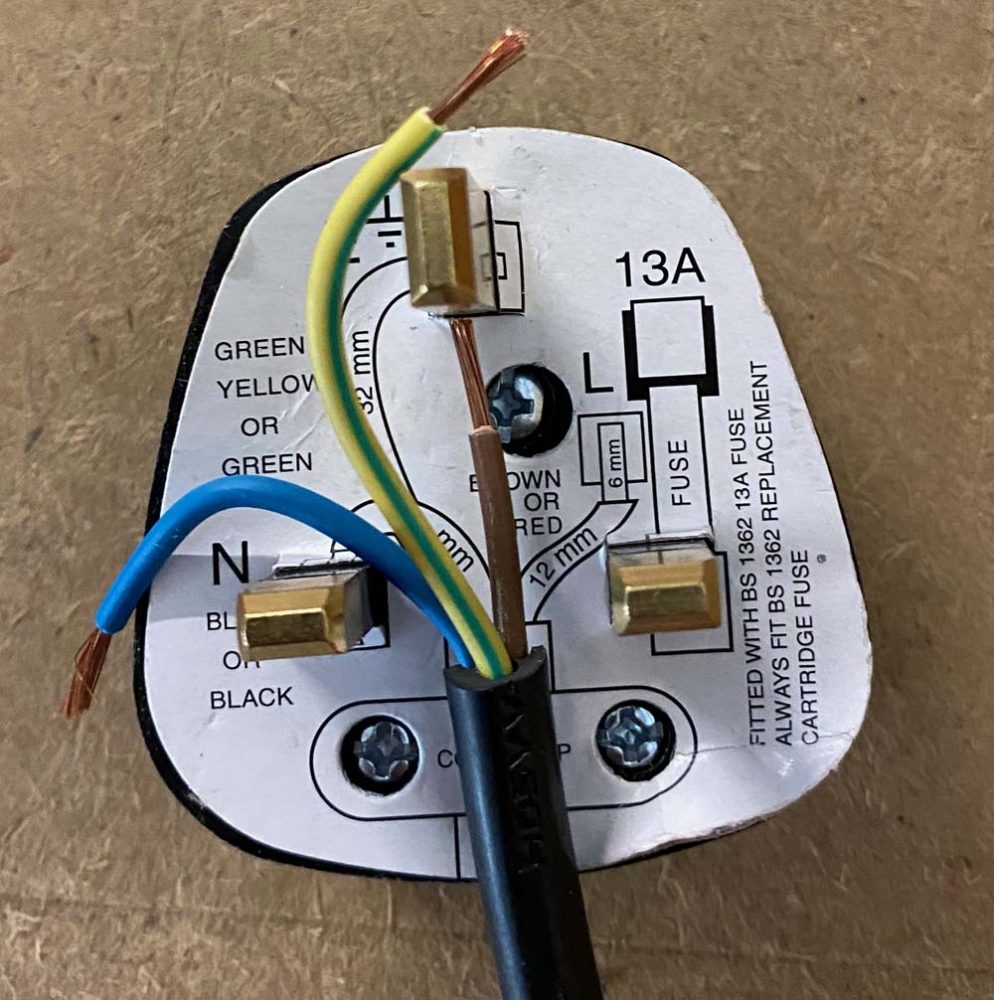
Using the wiring diagram supplied with the plug, cut each wire to the correct length one at a time. Line the wire up against the diagram and mark the point where it should be trimmed before cutting.
Once the wire is the correct length, carefully strip back the outer insulation to expose the copper conductor. Only a small amount of bare copper is needed — around 6 mm is usually sufficient.
Take care not to nick or damage the copper strands when stripping the insulation, as this can weaken the wire and affect the quality of the connection.
Repeat this process for each wire, checking against the diagram as you go.
Step 3: Open the plug and prepare the terminals
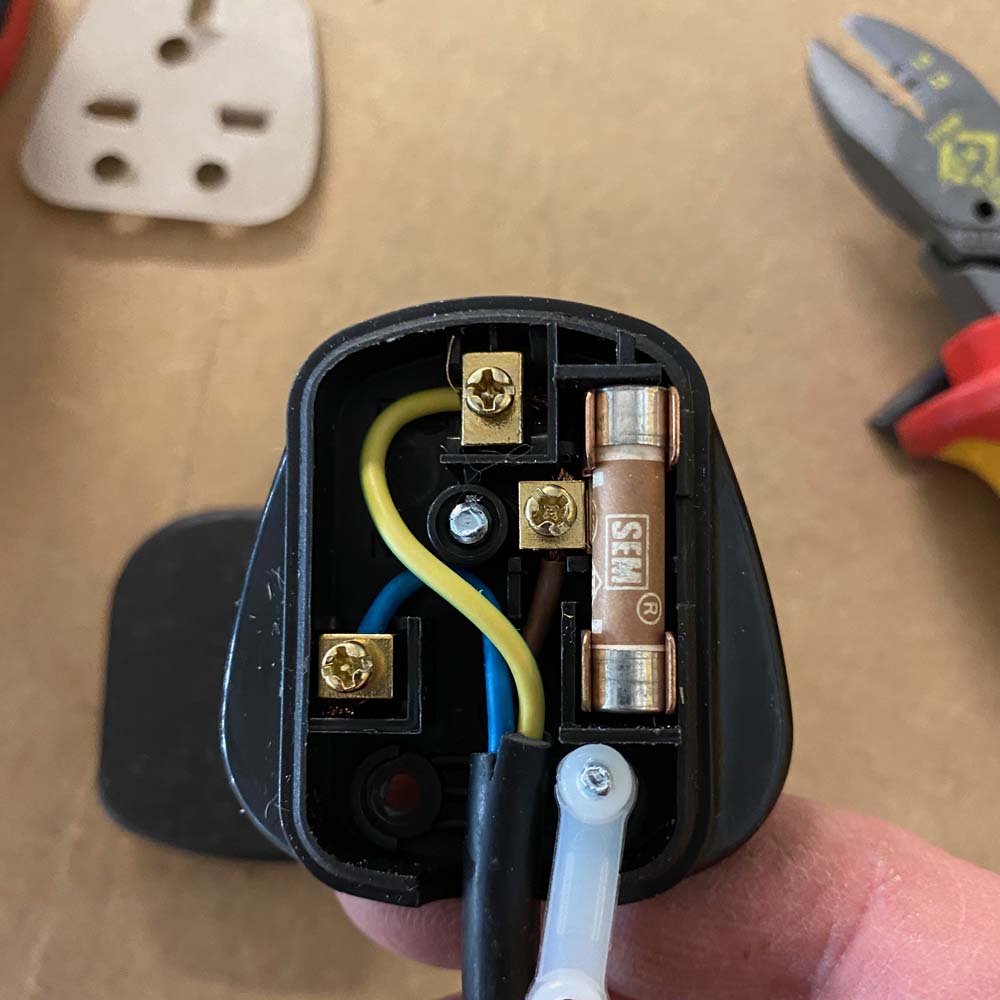
Using a screwdriver, undo the central screw on the plug to open the casing. Carefully lift off the top of the plug and place it to one side.
Next, using a smaller screwdriver, loosen the terminal screws inside the plug. These are the screws that secure the wires into the live, neutral and earth terminals. Loosen them enough to allow the wires to be inserted, but do not remove the screws completely.
You will also need to open the cable grip. Fully remove one of the cable grip screws and loosen the other. This will allow you to rotate the cable grip out of the way so the cable can be positioned correctly inside the plug.
At this stage, the plug should be open, the terminals loosened, and the cable grip moved aside, ready for the wires to be connected.
Step 4: Connect the wires, secure the cable and check the fuse
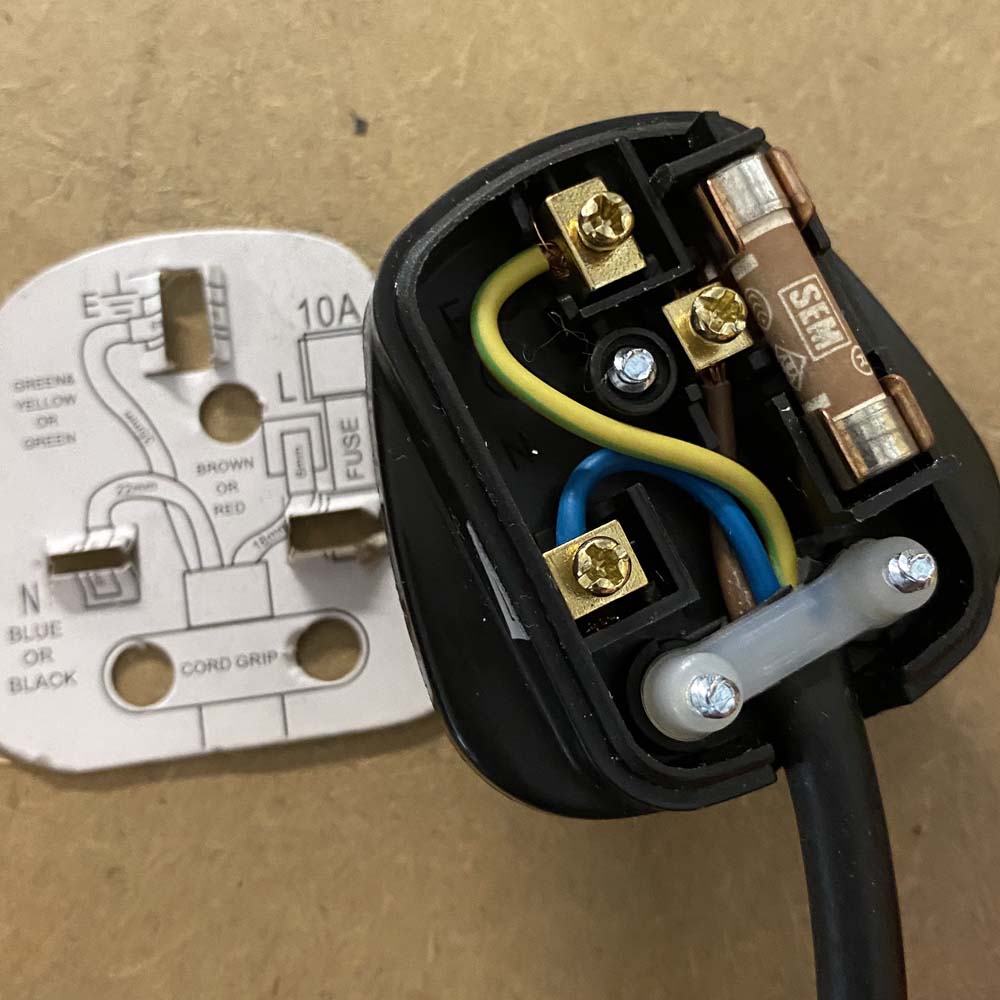
Now you can begin connecting the wires to their terminals. Insert each wire into the correct terminal and tighten the terminal screw to secure the copper conductor firmly in place.
It’s best to connect the wires in the following order:
-
Brown (live) wire
-
Blue (neutral) wire
-
Green and yellow (earth) wire
Make sure no bare copper is visible outside the terminal once the screw is tightened. Each wire should be secure, but avoid overtightening the screws, as this can damage the wire or terminal.
Once connected, position the wires neatly into the moulded channels inside the plug. Keeping the wiring tidy helps prevent strain on the terminals and ensures the plug will close correctly.
Next, rotate the cable grip back into its normal position over the outer sheath of the cable. Refit the screw you removed earlier and tighten both cable grip screws so the cable is held firmly in place. The grip should clamp the outer insulation, not the individual wires.
Before closing the plug, check that the fuse rating is correct for the appliance. Many new plugs are supplied with a 13-amp fuse as standard, but this may not always be suitable. The correct fuse rating depends on the appliance being used.
If you’re unsure which fuse is required, refer to our guide on plug fuse ratings before reassembling the plug.
Step 5: Reassemble the plug and carry out a final check
The final step is to refit the plug cover. Carefully place the top of the plug back into position, ensuring no wires are trapped or pinched inside the casing. Once aligned correctly, secure the cover using the central screw and tighten it firmly.
Before using the plug, carry out a quick visual check to make sure everything is seated correctly and the cable grip is holding the outer insulation securely.
You should now have a fully wired plug, assembled correctly and safely. By following these steps, you can be confident that the plug has been wired in line with UK wiring standards.
Common mistakes to avoid when wiring a plug
Even when following the correct steps, there are a few common mistakes that can compromise safety. Taking a moment to check for these issues can help ensure the plug has been wired correctly.
One of the most common mistakes is leaving too much bare copper exposed at the terminals. Any exposed conductor increases the risk of electric shock or short-circuiting and should be fully enclosed once the terminal screws are tightened.
Another issue is fitting the wrong fuse. Many plugs are supplied with a 13-amp fuse as standard, but smaller appliances often require a lower-rated fuse. Using a fuse that is too large can prevent the plug from disconnecting safely if a fault occurs.
Poor cable grip positioning is also frequently seen. The cable grip should clamp the outer insulation of the cable, not the individual wires. If the grip is secured over the inner conductors, it can lead to strain on the terminals and eventual failure.
Finally, trapping wires when closing the plug can damage insulation and create a hidden fault. Always check that the wiring sits neatly in the moulded channels before refitting the plug cover.
When not to attempt to wire a plug yourself
While wiring a plug is a straightforward task when done carefully, there are situations where it’s better to stop and seek professional help.
If the cable insulation is damaged beyond the section near the plug, the appliance should not be repaired by simply fitting a new plug. Similarly, if the appliance has signs of overheating, internal damage, or repeated fuse failures, it should be inspected by a competent person before being used again.
In workplaces, schools and commercial environments, electrical work is subject to additional safety and compliance requirements. In these settings, repairs should be carried out or checked by someone who is competent and understands the relevant regulations.
If you’re ever unsure, it’s safer to pause and ask for advice rather than risk an unsafe repair. If you’re local get in touch, we would be happy to change that plug for you.
How to wire a plug yourself – a video
An example of incorrect plug wiring
This is an image of an incorrectly wired plug to show you how easy it is to get it wrong…
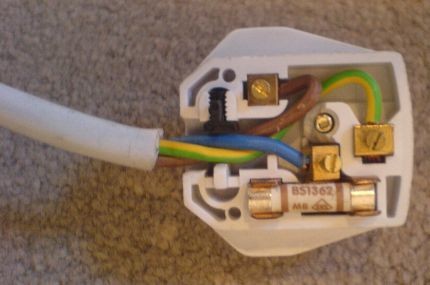
Even when the basic steps are followed, it’s surprisingly easy to make mistakes when wiring a plug. The image shown here is a good example of how a plug can appear acceptable at first glance, while still being unsafe.
In this example, the live (brown) and neutral (blue) wires have been connected to the wrong terminals. While the appliance may still appear to work, reversing these connections compromises the safety design of the plug and increases the risk of electric shock during use or maintenance.
The cable grip has also been fitted incorrectly. The grip should secure the outer insulation of the cable, not the individual inner wires. If the outer sheath is not clamped properly, any strain on the cable can pull the wires loose from their terminals.
Finally, the internal wires have not been cut to the correct lengths, meaning the outer insulation does not extend far enough into the plug. Correct preparation helps ensure the cable is supported properly and reduces stress on the terminals over time.
This example highlights why care and attention to detail are essential when rewiring a plug.
A note on two-core cables
Some appliances are supplied with two-core cable, meaning they contain only a live (brown) and neutral (blue) wire. These appliances are typically double insulated and do not require an earth connection.
If you are wiring a plug onto a two-core cable, the process is the same as described above, except there is no earth wire to connect. This is normal for certain appliances and does not indicate a fault.
Understanding UK plug wiring
UK plugs are designed with safety as a priority. Their size, pin layout and internal construction are deliberate features intended to reduce the risk of electric shock, fire and damage to equipment.
The earth pin is slightly longer than the live and neutral pins. This ensures the earth connection is made first when a plug is inserted, and that the internal safety shutters inside the socket are opened only when the plug is correctly aligned.
Live and neutral pins are partially insulated, reducing the chance of contact with live metal if the plug is handled during insertion or removal. Inside the plug, the wiring layout is designed so that if a cable is pulled excessively, the live and neutral conductors disconnect before the earth, maintaining protection for as long as possible.
The fuse inside the plug provides additional protection by disconnecting the supply if excessive current flows. This helps protect the appliance cable from overheating and reduces the risk of fire.
When wired correctly and used as intended, the UK plug is one of the safest designs in the world.
Final safety reminder
Wiring a plug is a straightforward task when done carefully, but it should never be rushed or guessed. Always check that the wiring is correct, the cable grip is secure, and the fuse is suitable for the appliance before use.
If you are unsure at any stage, or if the appliance shows signs of damage or repeated fuse failure, stop and seek professional advice. Electrical safety depends on attention to detail, and it’s always better to pause than to risk an unsafe repair.